
Blog · Progress Monitoring
11 Months of Weekly Aerial Construction Progress
The deliverable spec, the per-visit structure, the volumetric tracking, and the cost of a 11-month weekly engagement for a ground-up commercial build.
Last updated: June 25, 2026
A 11-month weekly aerial documentation engagement is one of the most useful things a project team can put on a long commercial build. The deliverable set is consistent, the data is comparable week-over-week, and the cumulative record becomes a defensible reference for any stakeholder question that comes up during the build or after substantial completion. Here is what the engagement actually looks like in practice, what it costs, and what the project team ends up with at the end.
Why a 11-Month Build Defaults to Weekly
A 11-month build is the heart of the project duration sweet spot for weekly aerial documentation. The project is long enough that the site changes meaningfully week-over-week: site prep one visit, foundation the next, structural steel the next, walls, roof, MEP, drywall, paving, closeout. A weekly cadence captures the project at every phase transition and gives the project team a continuous dated record of where the project stood at every point.
Slower cadences (bi-weekly, monthly) lose phase transitions. Faster cadences (twice weekly, daily) capture the same information twice. Weekly is the right cadence for most active commercial builds in the 6-12 month range.
The Per-Visit Deliverable Set
The strength of a long-term engagement is consistency. The per-visit deliverable set is the same every week, structured the same way, with the same file naming and the same data handoff. The project team never has to re-train on the documentation as the project moves through phases. The standard per-visit set includes:
- A complete aerial photo set from multiple angles and altitudes, dated and geo-tagged.
- Four 360-degree corner panoramas (one at each corner of the site).
- A current orthomosaic of the entire site at the time of the visit.
- A short aerial video pass for stakeholder use.
- A written narrative of what was observed at the visit, structured to drop into a weekly project update.
Add-ons like volumetric stockpile measurements and GCP-supported orthomosaics are added at defined points in the engagement rather than every week. The point is to keep the per-visit deliverable consistent so the cumulative record is clean.
The Four Corner Panoramas
The four corner panoramas are a contextual record of the site from each cardinal direction. They show the project in its surroundings: approach roads, neighboring properties, site access, laydown areas, vertical construction as it rises above grade. Over a 11-month engagement, the cumulative panorama set becomes a complete visual record of the build from every angle.
Panoramas are useful for stakeholders who want to see the site without flying to it. Owners, lenders, and remote GC team members can pull a panorama from any week and see the project as it stood at that visit. The set is also reusable for marketing, community relations, and project closeout presentations long after construction is done.
An Orthomosaic at Every Stage
An orthomosaic is a top-down, geometrically corrected aerial image of the entire site. Distances and areas in the ortho are accurate. The ortho is the right base map for measuring progress, tracking the building footprint as it grows, and supporting volumetric calculations on material stockpiles.
Producing an ortho at every visit gives the project team a dated, top-down map of the site at every point in the build. The cumulative ortho set is the right reference for any question about what the site looked like at a specific week, what the building footprint was at a specific phase, or how the parking lot subgrade progressed through the earthwork phase.
Volumetric Tracking Across the Engagement
Volumetric measurements are added at defined measurement points across the site (the building pad, the parking lot subgrade, the gas station pad, the material stockpile areas) at defined points in the engagement. The standard cadence is every 4-8 weeks during the earthwork phase, plus any point where a material quantity is needed for a progress payment or a cut-and-fill reconciliation.
The output is a per-measurement volume figure (cubic yards) and, where a density is available, a derived tonnage figure (tons). The volumetric data supports progress payments to the site work subcontractor and a final reconciliation at substantial completion. The data is documentation and planning grade, not survey grade, so it is appropriate for operational decisions, progress payments, and internal reporting.
The Subcontractor Handoff
Some long-term engagements are run direct (the GC hires the aerial documentation partner). Others are run through a subcontractor relationship: a national aerial data provider hires the on-site capture partner to run the engagement on their behalf, then processes the data downstream and delivers to their end client.
The subcontractor handoff is straightforward in practice. The data provider sets the visit cadence, the deliverable spec, and the quality bar. The on-site capture partner handles every weekly visit, every deliverable, and the secure transfer of the data back to the data provider at the end of each visit. The capture partner is the boots on the ground; the data provider is the brand-facing layer. The relationship works when both sides run the same play consistently, week after week, for the duration of the engagement.
What the Engagement Looks Like: Start vs Finish
Two 360-degree aerial panoramas from the same corner of a real 11-month weekly engagement. The first capture is from day one, when the site was still a graded pad. The second is from the final visit, when the building was complete and the parking lot was open. Click "View 360°" on either image to pan around the site.

Day one of the engagement · August 24, 2025 · Graded pad, no vertical construction

Final visit · June 25, 2026 · Supercenter, gas station canopy, parking lot, landscaping
A real engagement. The full case study with the per-week deliverable walkthrough is on the case study page.
Site Overhead: Start vs Finish
The same parcel from straight overhead. The orthomosaic at every visit is a geometrically corrected, top-down map of the entire site. Distances and areas on each image are accurate at any scale, so the ortho set is the right reference for any measurement, layout, or volumetric question over the life of the engagement.

Start of engagement · August 24, 2025 · Cleared and rough-graded parcel

Final visit · June 25, 2026 · Completed supercenter, gas station, parking lot, landscaping
11-Month Engagement Cost
A 11-month weekly engagement is priced on the per-visit rate, the deliverable scope, and any add-ons (orthomosaics, panoramas, volumetrics). The per-visit rate for a standard commercial site starts at $375. A 11-month weekly engagement is roughly 44 visits, putting the engagement in the $16,000-$18,000 range before add-ons.
Add-ons vary by project. A standard add-on set (ortho at every visit, four corner panoramas at every visit, volumetric measurements at defined points) is typically $200-$400 per visit, putting the total engagement in the $25,000-$35,000 range. Volume discounts apply for engagements that lock in a multi-month cadence upfront. Reach out with your project details and we will provide a project-specific quote within 48 hours.
Cost Comparison by Cadence
A side-by-side of the per-visit, total-engagement, and best-fit project profile for a 11-month engagement at each cadence we work with.
| Cadence | Per Visit | 11-Month Total | Best Fit |
|---|---|---|---|
| Weekly | From $375 | ~$16,500 | Active commercial build, lender draws, weekly stakeholder updates |
| Bi-Weekly | From $375 | ~$8,500 | Mid-stage project, bi-weekly owner or lender reporting cycle |
| Monthly | From $375 | ~$4,200 | Long-tail or low-intensity build, board or investor reporting |
| Weekly + Add-Ons | From $575 | ~$25,000-$35,000 | Engagement with ortho, panoramas, and volumetrics at every visit |
Totals are approximate and based on 48 weekly visits, 22 bi-weekly visits, or 11 monthly visits over an 11-month engagement. Project-specific quotes reflect the site size, airspace authorization, and the deliverable spec.
A 11-month weekly engagement is forty-eight-plus consecutive weeks of consistent deliverables. The cumulative record becomes a defensible reference for any project question, dispute, or audit, and the data set is the right foundation for a final time-lapse compilation at substantial completion.
See a Real 11-Month Engagement
A 11-month weekly engagement for a new Walmart Supercenter with gas station in Lady Lake, FL. Forty-eight-plus weeks of weekly aerial visits, four corner panoramas per visit, an orthomosaic at every stage, and volumetric tracking across the building pad, the parking lot, and the gas station pad. Delivered for a national aerial data provider.
Frequently Asked Questions
How much does a 11-month weekly aerial documentation engagement cost?
A 11-month weekly engagement is priced on the per-visit rate and the deliverable scope. The per-visit rate for a standard commercial site starts at $375 per visit. A 11-month weekly engagement is roughly 44 visits, putting the engagement in the $16,000-$18,000 range before add-ons like orthomosaics, panoramas, and volumetric calculations. Add-ons are quoted per project based on the site size, the deliverable spec, and the data handoff requirements. Reach out with your project details and we will provide a project-specific quote within 48 hours.
Is weekly the right cadence for a 11-month build?
Weekly is the right cadence for most active commercial builds in the 6-12 month range. A 11-month build is the heart of the project duration sweet spot for weekly: long enough that the project changes meaningfully week-over-week, short enough that the cumulative deliverable set is a complete record. For longer projects (18+ months), the cadence typically moves to bi-weekly or monthly in the fit-out and closeout phases. For shorter projects (under 6 months), weekly is the right cadence throughout, with a compressed final-deliverable window at substantial completion.
What is the difference between weekly progress monitoring and time-lapse?
Progress monitoring is the recurring set of dated aerial photo visits packaged as a per-visit report. Time-lapse is the final compiled video at substantial completion that shows the entire build from groundbreaking to closeout in a single artifact. Progress monitoring is the ongoing record. Time-lapse is the final video. Most projects that use time-lapse also use progress monitoring. They are complementary, not competing services. A 11-month weekly engagement is the data set that powers the final time-lapse compilation.
What is in a per-visit deliverable set?
The standard per-visit deliverable set for a long-term engagement includes a complete aerial photo set, a current orthomosaic of the site, and a short aerial video pass for stakeholder use. Extended deliverables added to a long-term engagement typically include four 360-degree corner panoramas per visit, volumetric stockpile measurements at defined measurement points, and a written narrative of what was observed at the visit. The deliverable structure is consistent across the engagement so the project team does not need to re-train on the documentation as the project moves through phases.
Can the same weekly cadence work for a project that is not a national retail build?
Yes. The same weekly cadence, the same deliverable set, and the same volumetric work apply to any commercial construction project: office build, retail, hospitality, healthcare, industrial, multi-family, infrastructure. The visit cadence is set by the project team. The pricing scales with visit frequency, project duration, and deliverable scope. Most long-term engagements are 6-18 months on a weekly or bi-weekly cadence, with a final compiled deliverable at substantial completion.
Who is the per-visit deliverable for?
Three audiences in practice. The GC project team uses it for internal status and schedule tracking. The owner or developer uses it for stakeholder updates, often packaged into a monthly board or investor report. The lender uses it as supporting documentation for construction loan draws. The deliverable is structured so any of the three can read it without prior context. A consistent deliverable set across the engagement is the single most important factor: it lets all three audiences pull what they need without re-explaining the project each time.
How does volumetric tracking work in a long-term engagement?
Volumetric measurements are taken at defined measurement points across the site (the building pad, the parking lot subgrade, the gas station pad, the material stockpile areas) at defined points in the engagement (typically every 4-8 weeks during the earthwork phase, and at any point where a material quantity is needed for a progress payment). The output is a per-measurement volume figure that supports progress payments to the site work subcontractor and a final cut-and-fill reconciliation at substantial completion. The volumetric data is documentation and planning grade, not survey grade.
What is the final deliverable at the end of a 11-month engagement?
The final deliverable is a complete dated record of the project: every week of aerial photo sets, the full set of 360-degree panoramas, the orthomosaic from every visit, the volumetric calculations at each measurement point, and a final compiled set of deliverables. The full record is a continuous visual history of the build from groundbreaking to substantial completion, structured so any stakeholder can pull a specific week, a specific phase, or a specific deliverable type on demand. The final deliverable is also the data set that powers the time-lapse compilation if one is commissioned.
About the Author
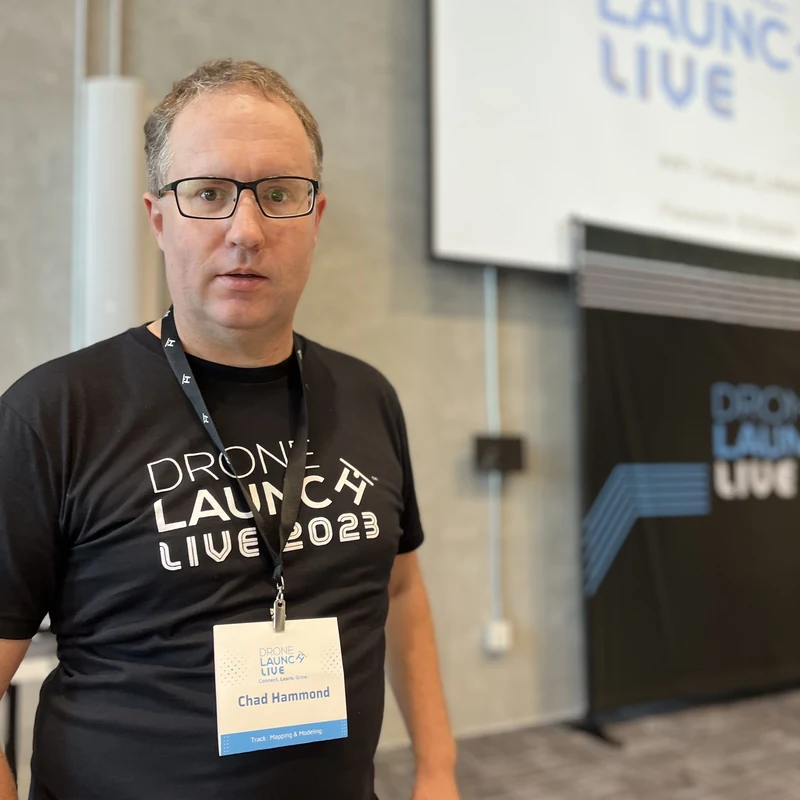
Chad Hammond
Founder, FAA Part 107 Remote Pilot
Chad is the founder of Skyland Pixels and the primary on every long-term aerial documentation engagement. He has run weekly, bi-weekly, and monthly progress documentation for commercial builds across Central Florida and is the point of contact for every project from scoping through final deliverable.
More about Chad →Related Posts
Weekly vs. Bi-Weekly vs. Monthly Progress Photos
A cadence-selection guide for project teams choosing weekly, bi-weekly, or monthly progress monitoring.
How Construction Time-Lapse Saves Money
The time-lapse engagement, the stakeholder value, and where time-lapse pays for itself on a commercial build.
What Is Construction Documentation?
A field guide to construction documentation for project teams, owners, and lenders.
Planning a Long-Term Commercial Build?
Tell us about your project. We will recommend a visit cadence, a deliverable set, and a price for the full engagement.
Contact Us